Australian American football coaches have until 31 December to apply for an opportunity few get to experience: a week inside an NFL organisation. The Tampa Bay Buccaneers’ 2027 National Coaching Academy offers coaches the chance to learn from professional coaching staff, observe activities surrounding rookie minicamp and gain an understanding of how an NFL franchise develops its players.
For coaches working within Australia’s developing American football community, the opportunity is particularly significant. Many local programmes operate with volunteer coaching staffs, limited training sessions and athletes who balance football with employment, study and family commitments. Professional development often depends on individual initiative, making structured opportunities to learn directly from experienced NFL personnel especially valuable.
The Buccaneers will welcome 25 selected participants to Tampa, Florida, from 10–16 May 2027. The Academy combines coaching instruction, film study, professional development and opportunities to interact with the organisation’s football operations staff.
Simon Bramberger understands what that experience can offer. The Austrian coach is currently offensive-line coach and run game coordinator for the Munich Cowboys senior team in Germany’s GFL1 competition. Working on a coaching staff led by Australian head coach Christos Lambropoulos, he has firsthand experience of developing players within European football. Selected for the Buccaneers’ 2025 Academy, Bramberger told Aussie Gridiron Network how his time in Tampa reinforced lessons particularly valuable for Australian coaches.
Taking the chance
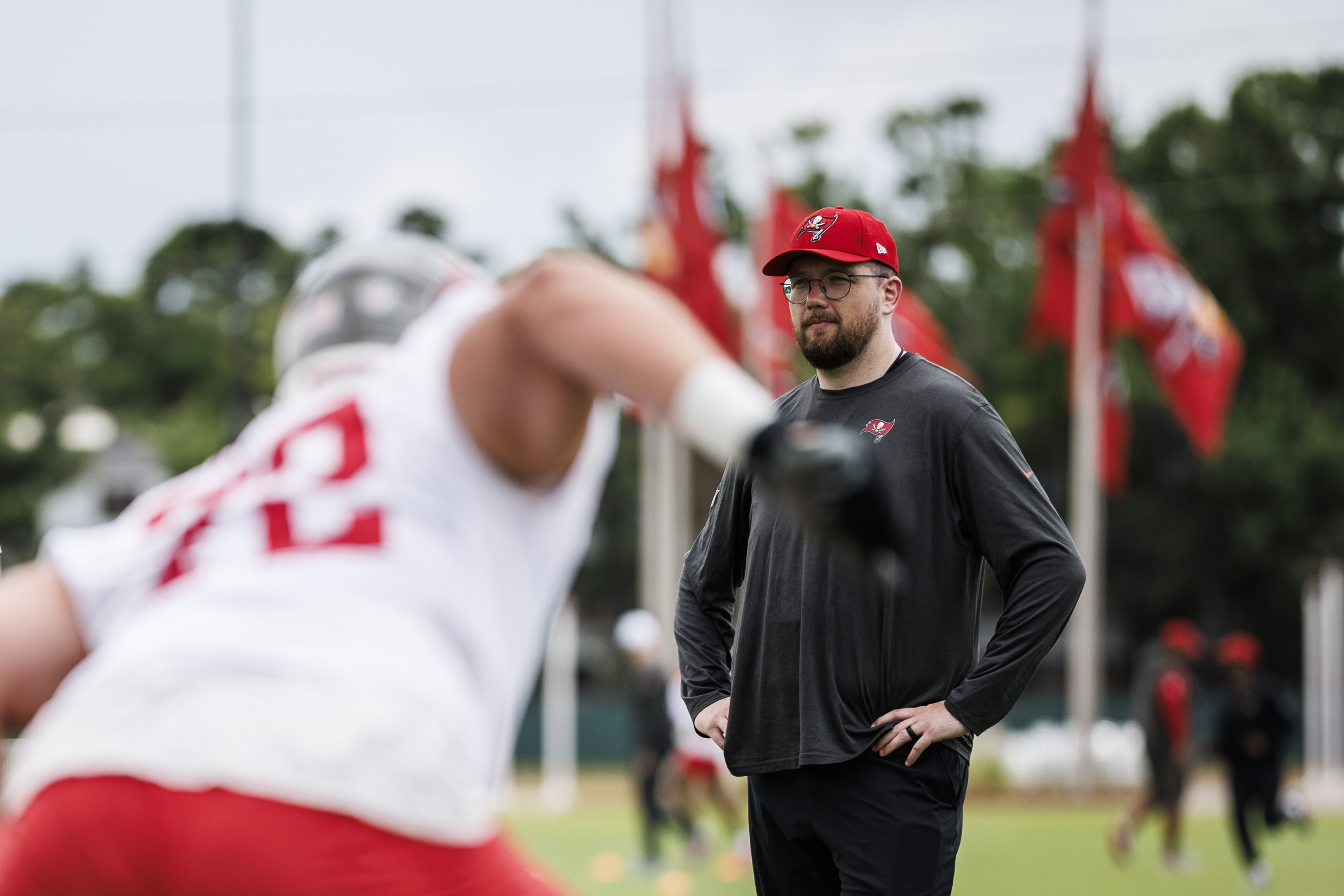
Despite his coaching experience, Bramberger initially applied to the National Coaching Academy primarily to challenge himself. He wanted to move beyond his comfort zone, establish professional relationships and experience an unfamiliar football environment. The application required a letter of recommendation, something he found uncomfortable because it meant asking someone else to advocate on his behalf.
He approached former NFL offensive lineman Joe Thomas, whom he had met while coaching in Munich. Thomas responded quickly and offered more support than Bramberger anticipated. When his acceptance arrived in early 2025, Bramberger researched the other 24 participants and prepared to learn from the Buccaneers’ staff while testing himself alongside coaches from different backgrounds.
Inside an NFL coaching room
Bramberger spent his Academy experience alongside the Buccaneers’ offensive-line staff, observing Kevin Carberry and Brian Picucci as they introduced incoming rookies and undrafted free agents to the team’s systems and expectations. He anticipated advanced technical knowledge, but what impressed him most was the quality of the instruction.
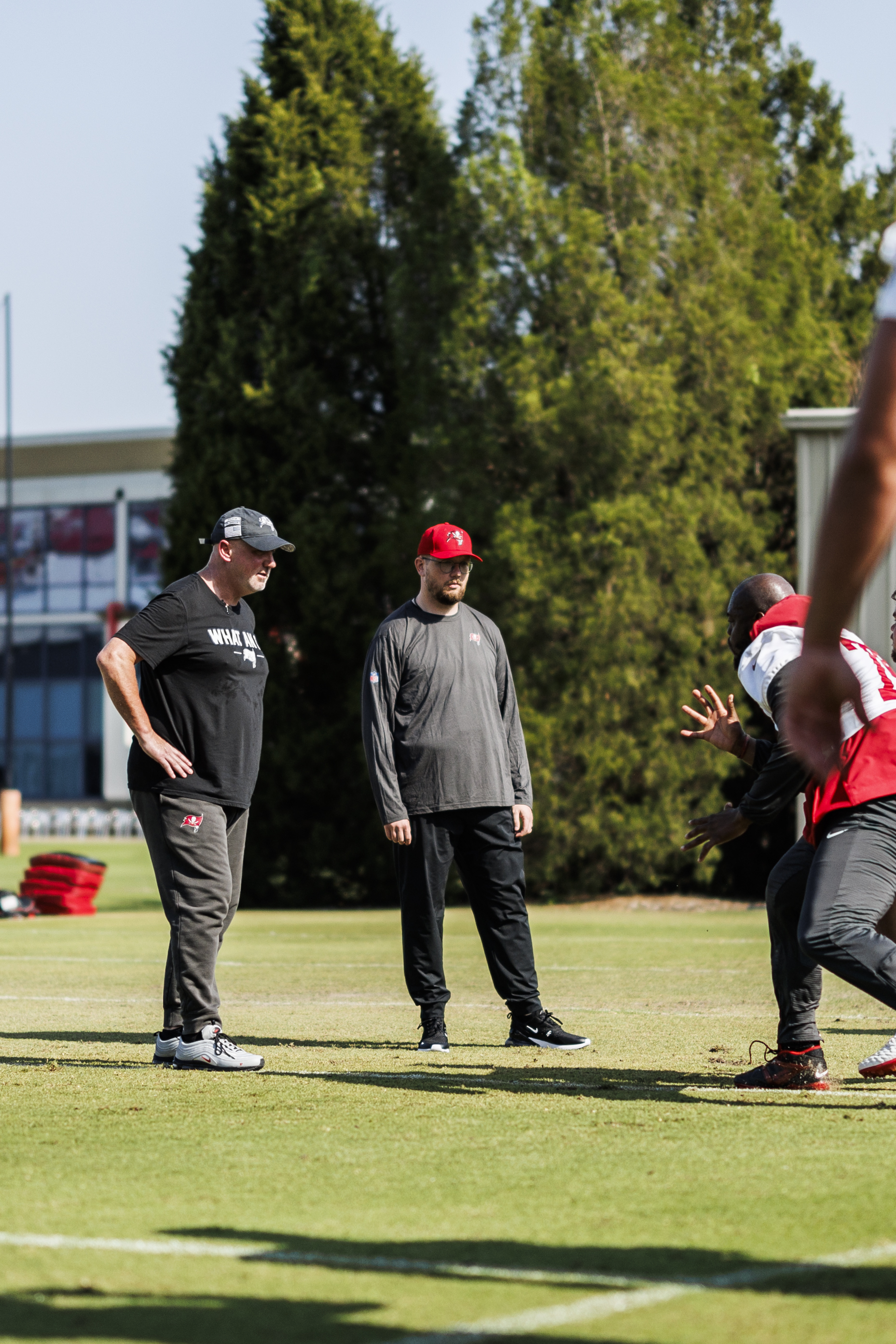
“But I did not expect Kevin and Brian to be such great teachers,” Bramberger told AGN. Working with players arriving from different college programmes required the coaches to communicate clearly, adapt their teaching and build consistency across the offensive line within a short period. He was impressed by their patience, attention to detail and demanding professional standards.
He also gained greater appreciation for professional football as a workplace. Technical expertise matters, but relationships, conduct and compatibility with a team’s expectations influence opportunities. For coaches pursuing careers beyond their domestic environments, understanding those demands may be as valuable as new techniques.
Why the fundamentals matter
One of Bramberger’s most revealing observations initially sounds contradictory: “The more I see, the more I experience and the longer I reevaluate my own coaching, the less coaching I actually do.” He meant reducing unnecessary variation, not reducing his effort. Experience encouraged him to devote more attention to teaching the movements players need to execute consistently.
“I stick to basic drills, coach them very detailed and let my players get as many repetitions as they can get in their position specific movements,” he explained. His time in Tampa reinforced repetition, consistent position-specific instruction and resistance to changing training plans in response to each game-day problem.
That approach has particular relevance for Australian football. When teams train only a few times each week, coaches must balance individual development, tactical preparation and team coordination. Australian clubs cannot necessarily replicate NFL facilities or staffing, but can apply principles of effective instruction and preparation.
What the 2027 Academy offers
Now entering its fourth year, the Buccaneers’ National Coaching Academy will run from 10–16 May at the AdventHealth Training Center in Tampa. The programme offers coaching instruction, team activities, film review, professional-development sessions and opportunities to interact with football operations personnel.
Applicants must have at least three years of qualifying coaching or football-programme experience at high-school, college or semi-professional level and provide a letter of recommendation. Active professional and semi-professional players are ineligible. Applications close on 31 December 2026, and Australian applicants should check travel, immigration and financial requirements directly.
An opportunity for Australian coaches
Bramberger believes coaches should not allow doubts about their experience or location to prevent an application. “Be you, be professional, take it as seriously as you can and put one foot in front of the other,” he said.
Bramberger travelled to Tampa expecting to learn from leading coaches and returned to Germany with a greater appreciation for something simpler: how to teach the game well. For Australian coaches considering their own development, that may be the most important lesson of all. The first challenge is deciding to apply.
Applications close 31 December 2026. Programme: 10–16 May 2027. Official Buccaneers National Coaching Academy page · Apply for the 2027 Academy